

The Fuel Project

The decarbonisation of LONDon’s Film & TV transport and mobile power fleets
The Fuel Project has brought together major studios, film agencies, academia, suppliers, producers, broadcasters, streamers, sustainability consultants, and more, to develop support for our supply chain and pathways for the industry to collaboratively and rapidly end 50% of their collective emissions by 2036


Scroll down for the reports!
PHASE III: is Underway!
Get in touch here if you would like to be the first to hear about the Fuel Project’s next body of work or if you would like to partner with the Fuel Project.
The Fuel Project is a model for industry collaboration on shared material emissions. We would like to support other industries and regions to use this work to decarbonise their shared supply chain collectively in line with a just transition for suppliers.
Please get in touch if you’d like us to support you in your collective industry supply chain decarbonisation.
PHASE II: the SHIFT project, 2024
THE LARGEST film & TV supplier decarbonisation RESEARCH PROJECT TO DATE sets a DECARBONISATION scenario for transport and MOBILE POWER fleets.
Our latest report, The Shift, explains the current landscape of Film & TV supplier vehicles and mobile power unit fleets, the carbon footprint they create, and sets the timeline for achieving net zero.
SOME KEY FINDINGS:
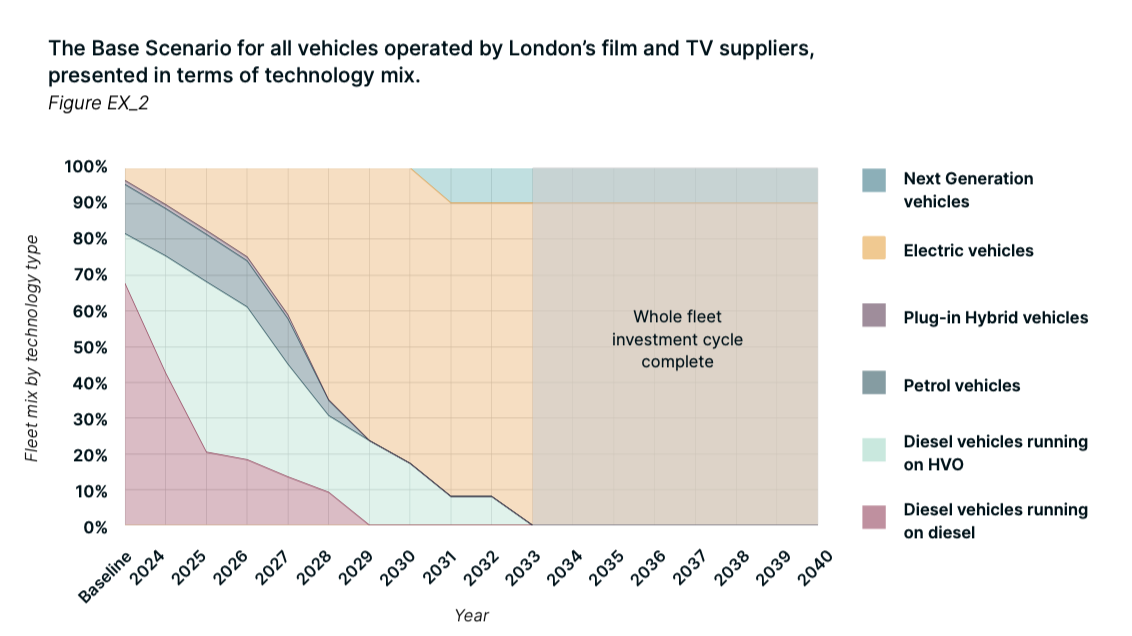
By 2033, London’s film and TV suppliers could reduce transport carbon emissions by 93% and reduce generator emissions by 91% by 2036.
Real world data from 190 generators on productions, shows they are significantly over-specced (i.e. the generator has a much greater potential energy output than needed for its actual use), with the vast majority (83%) never reaching 50% of power capacity. This leads to additional fuel consumption, emissions and costs.
Portable batteries available today have sufficient power output to cover 99% of production use cases.

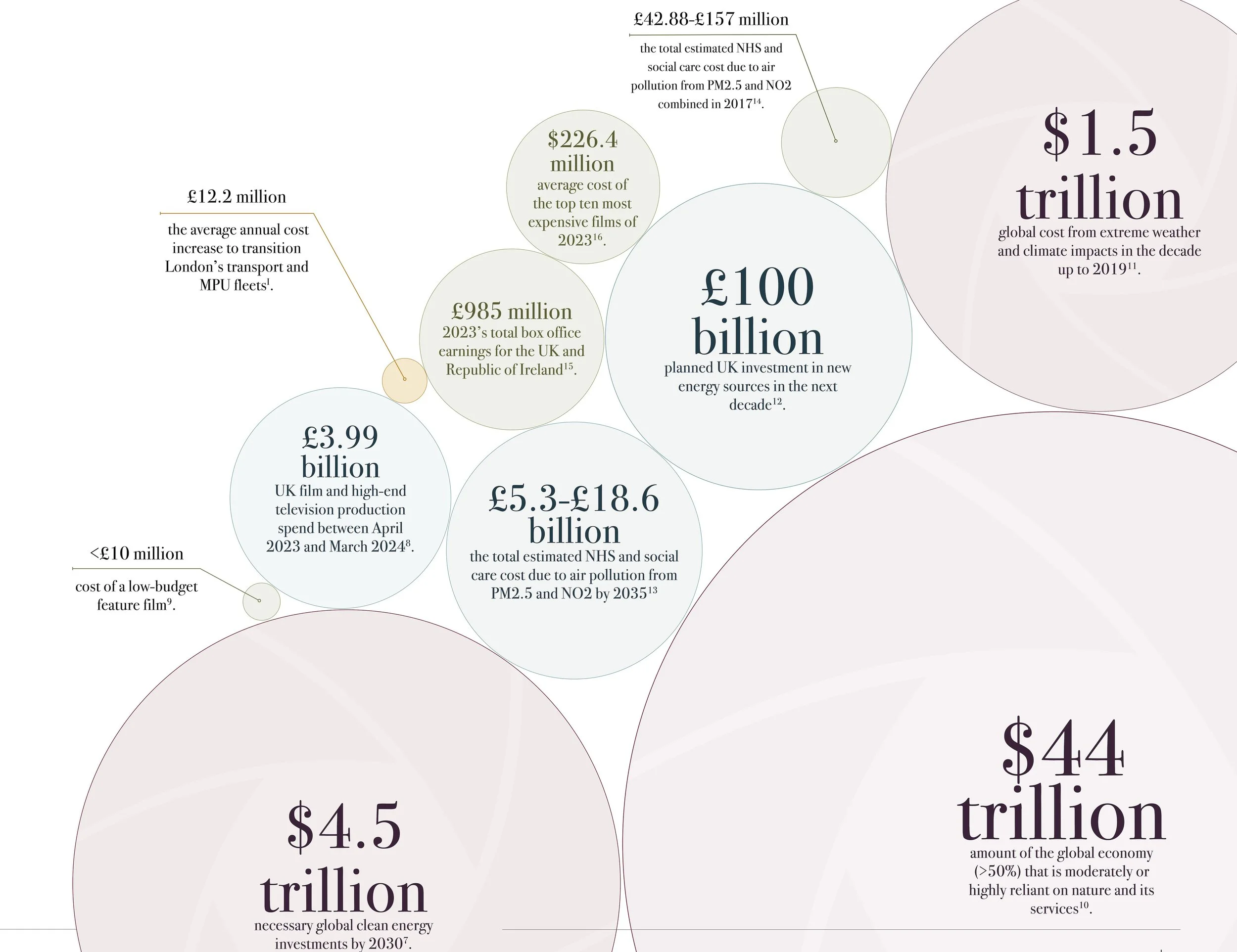
For the price of one INDEPENDENT film a year
(£12.2 million)
London’s Film & TV fleet
could transition away
from combustion fuels
by 2036.
The Shift Report represents Phase Two of The Fuel Project and is the first report of its kind to set out a clear decarbonisation pathway for transport and power in the film and TV industry.
This study delivers on three key goals:
Reports the most reliable carbon footprint to date for all of London’s film & TV road transport and mobile power.
Includes just transition principles within decarbonisation scenarios for London based suppliers, including equitable deadlines for fossil fuel phase out.
Assesses the financial cost to the industry of the transition.
The Fuel Project has been co-authored by Creative Zero founder Roxy Erickson, Alex Lewis-Jones, Creative Zero’s transport & power specialist and Laurence Johnson at Film London.
Read more about the Study and its contributors HERE.
PHASE I: the SUPPLIER GUIDANCE REPORT, 2022
The Fuel Project’s first publication, the Supplier Guidance Report was written to provide film & television suppliers with the accurate knowledge to make planet-saving choices when it comes to vehicles and mobile power units. It provides a deep and nuanced understanding of the role HVO, electrification and hydrogen can play in London’s film & television industry.
This report marked a change in the industry, by looking directly at supply chain, skipping the industry ‘middle man’ of production-based carbon accounting. It was the first phase of collaborating with key stakeholders to support rapid industry supply chain decarbonisation.
The Fuel Project - Supplier Guidance Report is a Film London and Creative Zero collaboration with funding from GreenScreen Interreg.

work with us on your own transport & Power unit fleet MANAGEMENT
If you are a supplier, creative industry rep, producer, project manager, facility or anyone else,
Creative Zero can support you to:
Build a tailored investment strategy for each your vehicle or mobile power unit fleets;
Plan for infrastructure needs, such as on-site recharging;
Identify the low-hanging fruit, such as making the most of low-carbon switches already available;
Identify and engage in relevant low-carbon vehicle trials and available grants, and plan for future tech.